Friday, 1 November 2013

The History of Computer Games 1850s-1970's

Many of us can go no longer than 5 minutes without getting the next technology fix, whether it be checking emails on a smart phone, social networking or just plain procrastination on the internet.

Admittedly I procrastinate on tumblr a fair amount.

Computers play an essential part of our everyday lives. There are now over 1,966,514,816 connected to the internet1, your computer reading this blog adding to that number, but where and when did this all begin?

The history of computer games starts with the history of the computers, depicting when these intricate machines were created to improve our lives and help the advance the human race; and how they opened a new door to escapism we see today.
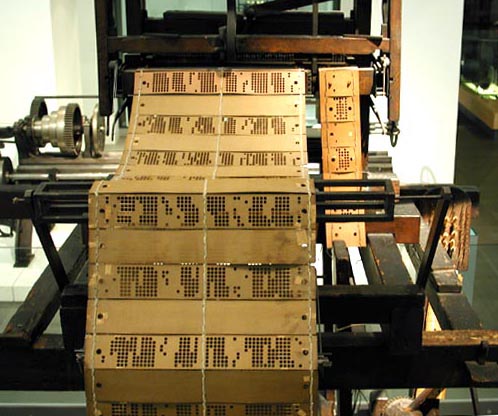

Jacquard Loom
It all started long ago, in the land before electricity in 1801 Jacquard loom, which was a mechanical loom controlled by a chain of cards with holes punched through, multiple rows of holes were punched into the cards, then multiple cards were strung together in a certain order (representing the desired pattern) and then fed into he loom where a hook would be raised or stopped according to a hole or solid card. Much similar to binary, with its on and off 0 and 1.

This was seen as an important step in the direction of computers as being able to change the pattern the loom would make by changing cards was an important concept that influenced computer programming and data entry.2

What followed this was Charles Babbage's Difference Engine in 1849, which is an automatic mechanical calculator.3 It consists of a series of columns, representing decimal places and used to calculate equations other important works. However it was never actually built after being funded by the government for 20 years. It was an important step in computing, another foundation block.
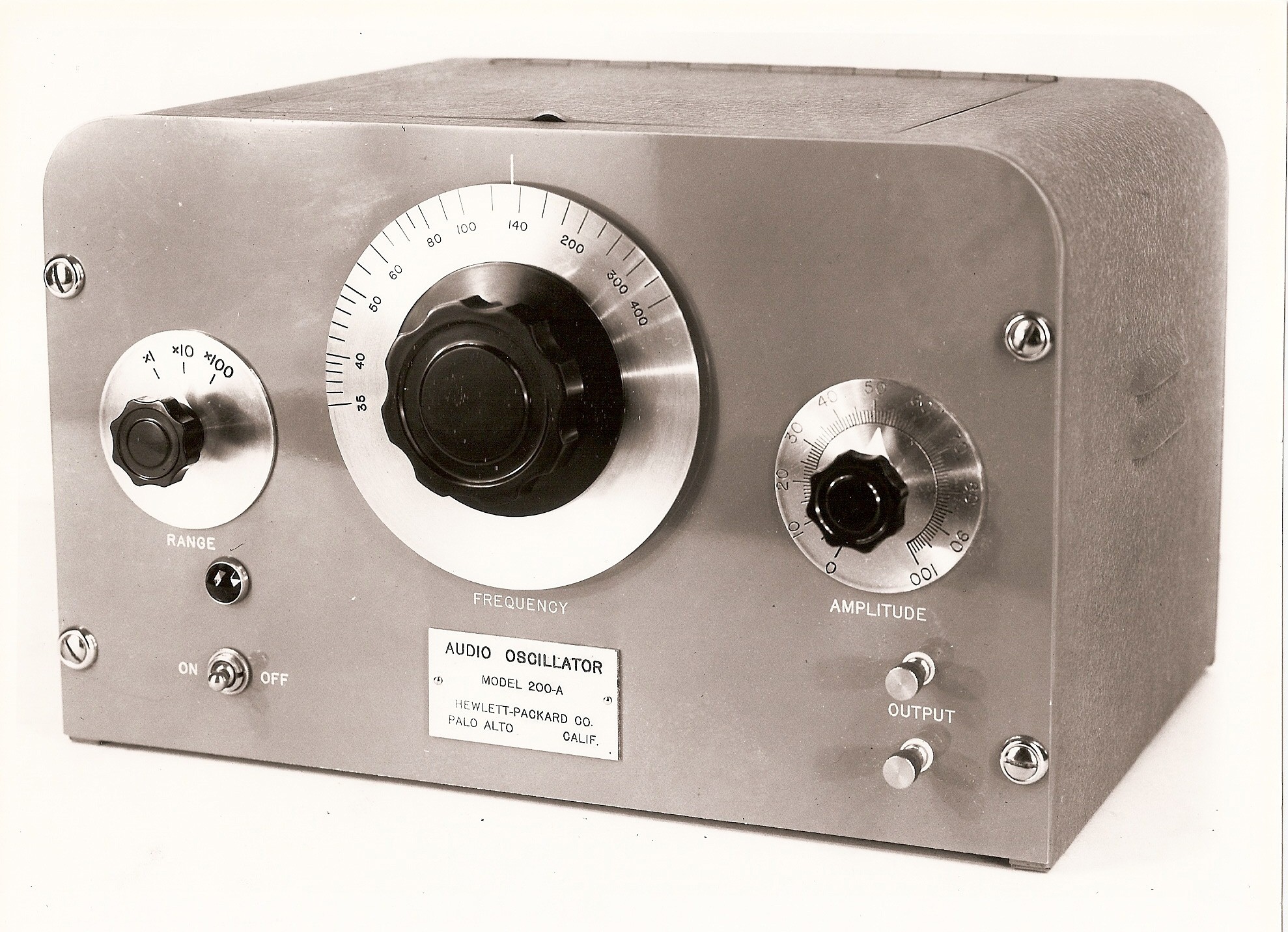

Audio Oscillator
Nothing really progressed until World War II became the kick up the rear to computers as they were needed. This resulted in the audio oscillator in 1939.

The Zuse Z3 was the first working programmable, full digital automatic computer, made in 1941 by Germans for analyse of wing flutter.4

In 1943 the colossus computer operated by women was fundamental to cracking the enigma code, I had never heard of this before and that is sad as these women were not only detrimental to the war but to our survival and technology.

Another notable contribution to the development of computers was the Cathode Ray Amusement Device in 1947, I find this name funny but it was the first interactive electronic game. It was based on World War II radar displays, the players turned dials to adjust the trajectory of light beams in a attempt to hit targets printed on screen overlays.5 It was never released commercially.


In 1951 the LEO was the first computer to be used for commercial business applications. 6 It took up the space of a whole room, but made the admin jobs of business such as payroll and inventories a lot easier and less time consuming.

The special contribution to this time line of computing though is the 1960 DEC PDP-1, which was the first computer to have what could be recognised as a game. Pong. It was eventually developed and released by Atari for people to play in 1972 in arcades.
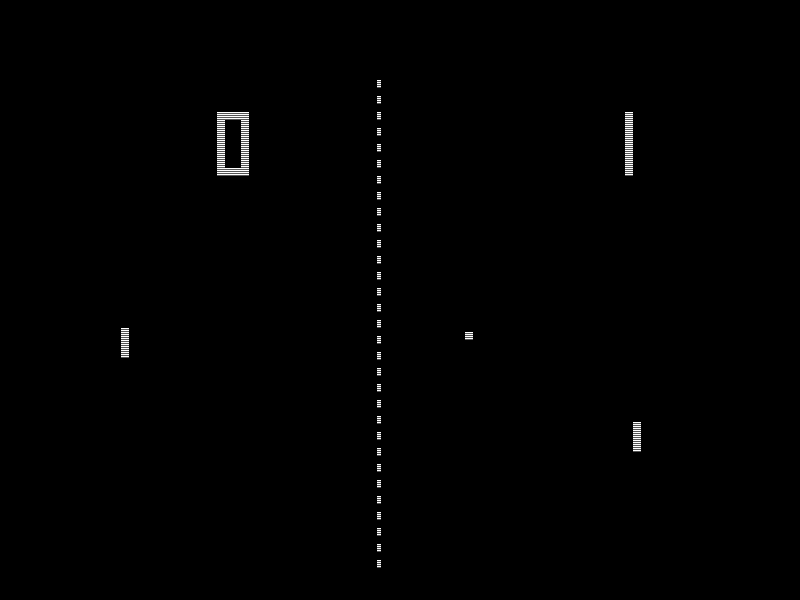

The Journey from the beginning to 1970 was a long and important road, but the rate of development increases dramatically from then onwards.


1 http://uk.ask.com/question/how-many-computers-are-there-in-the-world
2 http://en.wikipedia.org/wiki/Jacquard_loom
3 http://en.wikipedia.org/wiki/Difference_engine
4 http://en.wikipedia.org/wiki/Z3_(computer)
5 http://classicgames.about.com/od/classicvideogames101/p/CathodeDevice.htm
6 http://en.wikipedia.org/wiki/LEO_(computer)

Friday, 18 October 2013

A bit about me, and what on earth my blog title means:

Bethany Marie Elizabeth Cox is what my parents thought fit to name me but to save you the jaw ache just call me Beth. I'm from a tiny village called Wendover in the countryside with a 6 mile woods backing onto my house:

The High-street


View from a neighbors garden


So as you can image moving to Leicester is a bit scary, I'm in a concrete jungle and its a bit unnerving, mainly because I don't have to take a 20 minute drive to some form of civilisation other than a market and village shops. 

I am a student at De Montfort University studying Game Art Design. De Montfort has the course that stood out to me the most, with art being the fundamental core of its Game Art course, and I feel so privileged to be here. I am a completely traditional artist and have never done any digital or 3D work before this course, and it is quite daunting considering that games are digital and 3D! None the less I am up to the challenge and look forward to throwing myself into 'boot camp' which the course leaders call this year. Time management is something I need to work on, but finally being at university studying what I love I believe I can motivate my self to work hard to fulfil my personal goals and not only pass this year but to excel in my own ability.


I am an 'avid collector' of pretty much anything to do with games, films ,and books especially Monster Hunter, The Legend of Zelda, The Elder Scrolls and Lord of The Rings. I have an extensive collection of statues, figures, art-books, I've also discovered just how much I love cooking after having to fend for myself in halls, I did have a head start though, both my parents are qualified chefs.

My most prized possession in my collection, look at how big it is next to a tennis ball!

 
As a Norse Mythology fanatic I love to embrace my 'inner Viking' whenever possible and in every post of this blog I am sure you will be exposed to an interesting fact or tale about the Mythology of the North Germanic peoples, excluding Finland... they have their own crazy folklore book with 22,795 verses.

The weird title of this blog is three runic characters of the Norse 'Futhark' which takes its name form the first 6 letters of it, you know just like how the alphabet gets its name from the Greek letters alpha and beta. But it is not just phonetic, each rune has a meaning or association to an element of  Norse Mythology , some awesome and some not.

B-erkona (birch tree, and Idun goddess of spring) E-hwarz, (horse) TH-urisaz (giants of Norse mythology) spells my name. Effectively meaning 'tree horse giant'. It's kind of cool?

Have a go yourself here and write a comment with your Norse Rune name!